
Proof of Life
Field Notes IV.XXVIII: Uncertainty and ethics in the age of AI

Welcome to Field Notes!


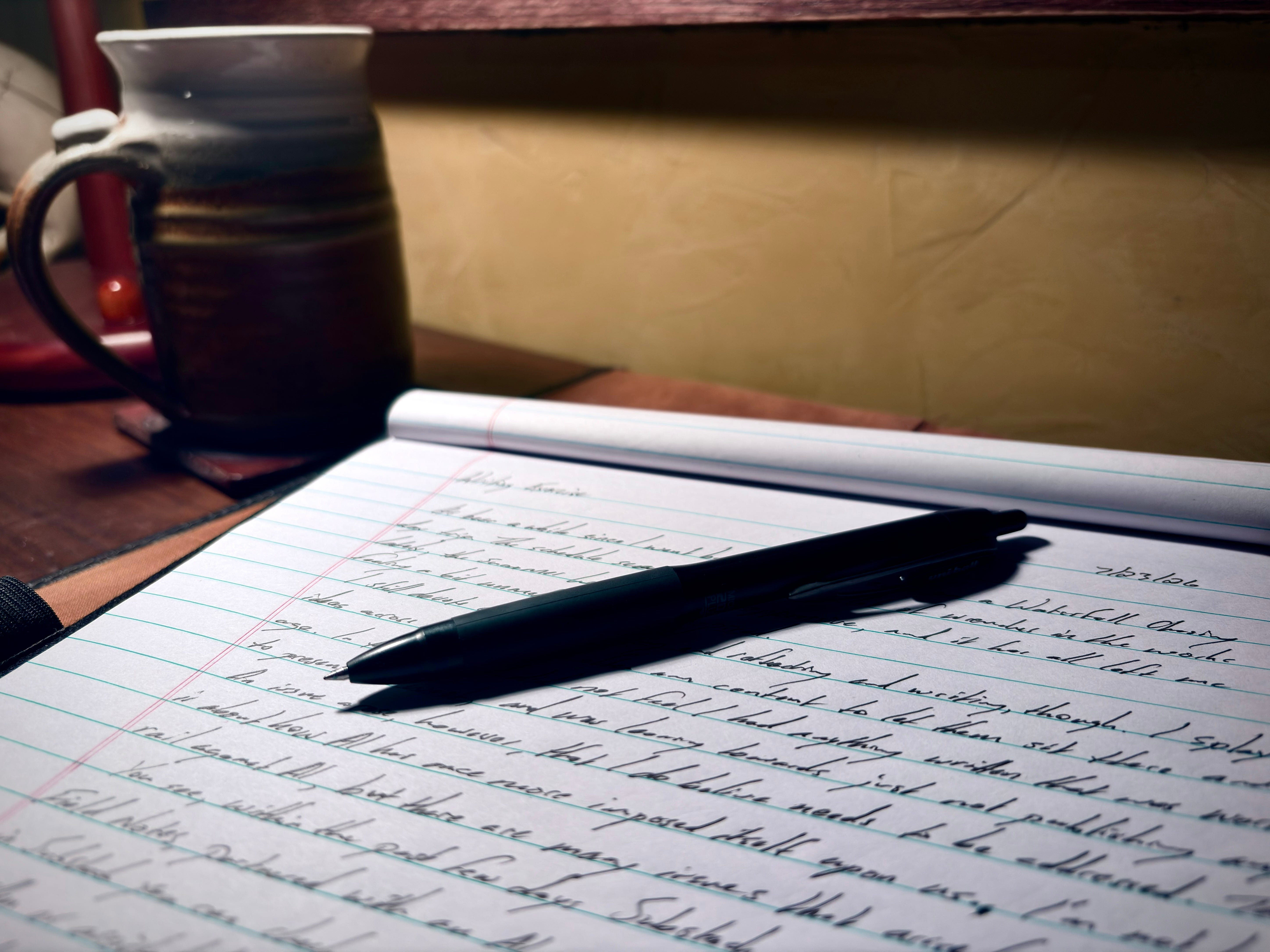
Life does not currently offer me set routines, but I try to sit and write often. This usually amounts to smearing words on a page. Ideas filleted open for me to examine. Most I leave there to rot, but sometimes they age well into something worth sharing.
My ideas did not develop into anything significant this week and I was leaning towards not publishing anything at all. However, an issue came to my attention that I do believe needs to be addressed. That issue is about Artificial Intelligence.
Within the past few days Substack, the platform I use to publish Field Notes, partnered with an AI company, Pangram. Now, on any essay in Substack, including my own beginning with this one, you can click a button to analyze how much, if any, was written or assisted by AI.
I only became aware of this after seeing other writers check their own work with it, demonstrating theirs was 100% authentically human written. I didn’t give that too much consideration, but did feel a little conflicted by seeing them do that. As if the necessity to do it pained me somehow.
A friend of mine later contacted me to ask my opinion about this. He showed me this Note addressing it-
Wow. It seems there are significant issues here that demand some attention. I may not have the answers, but let’s dig in.

First let me describe my current thinking on AI in general. Despite using it very minimally, I’m not going to rail against it. My conclusions are not yet fully settled. I haven’t taken a hard line stance because there is much that I do not know and may yet be persuaded by rational arguments from people who do know. Let’s say that what follows is my working hypothesis about ethical use of AI.
There are undoubtedly beneficial uses for AI. I won’t list them here, but advances in medicine and science are just a start. Much of the debate in favor of it seems to assert that it is ultimately a tool like any other. That it is not inherently bad, but how it is used could be good or bad. I believe this is a valid point.
In that vein, I don’t see it as an evil or a poison that immediately infects upon any contact. Many months ago I gave ChatGPT a test run, just so I could have some knowledge of its capabilities. No, I did not use it to generate any writing. I asked it about topics I was wanting to learn. To explain concepts. To compare and contrast the underlying elements of similarities I recognized across genres. It seemed to do this wonderfully. The experience equated to having personal conversations with the most knowledgeable of experts. The possibility of using it as a tool for my own understanding was profound and continues to loom as a temptation.
As great as that sounds, the AI did lie to me. I asked it for a quote. It gave me one. It took me repeatedly asking for where the quote came from for the AI to acknowledge that it wasn’t a direct quote from the text, but a summary statement aligned with what the author would have said. That’s a big problem!
But let’s take a look at the other side, the one that rejects AI. I actually find myself more aligned with this perspective. With this perspective, the problem mainly relates to creative endeavors such as writing, art, photography, music, etc.
We must recognize that these are the methods of humans relaying the human experience to other humans. These creative outlets are the stuff of life. They are expressions of the essence of what it means to be human. That is why we create them and how we wish to receive them. So, there is a legitimate objection when someone uses artificial intelligence to create a simulation of the human experience and present it as authentic. It is a lie. Yet the simulations are becoming so good that you’re deceiving yourself if you think you can always discern them.
The other protest against AI is in the way it operates. It essentially steals or plagiarizes the creative intellectual property of others to use as source material for what it generates. It does not give compensation. It does not even ask for consent.
Are you willing to use a tool to generate your human perspective for you? Are you willing to use a tool that runs on stolen ideas?
This seems to be the most common debate. How do we use AI ethically? To what extent and in what circumstances? But I have another grievance with AI that must be confronted before we can even arrive at this question.
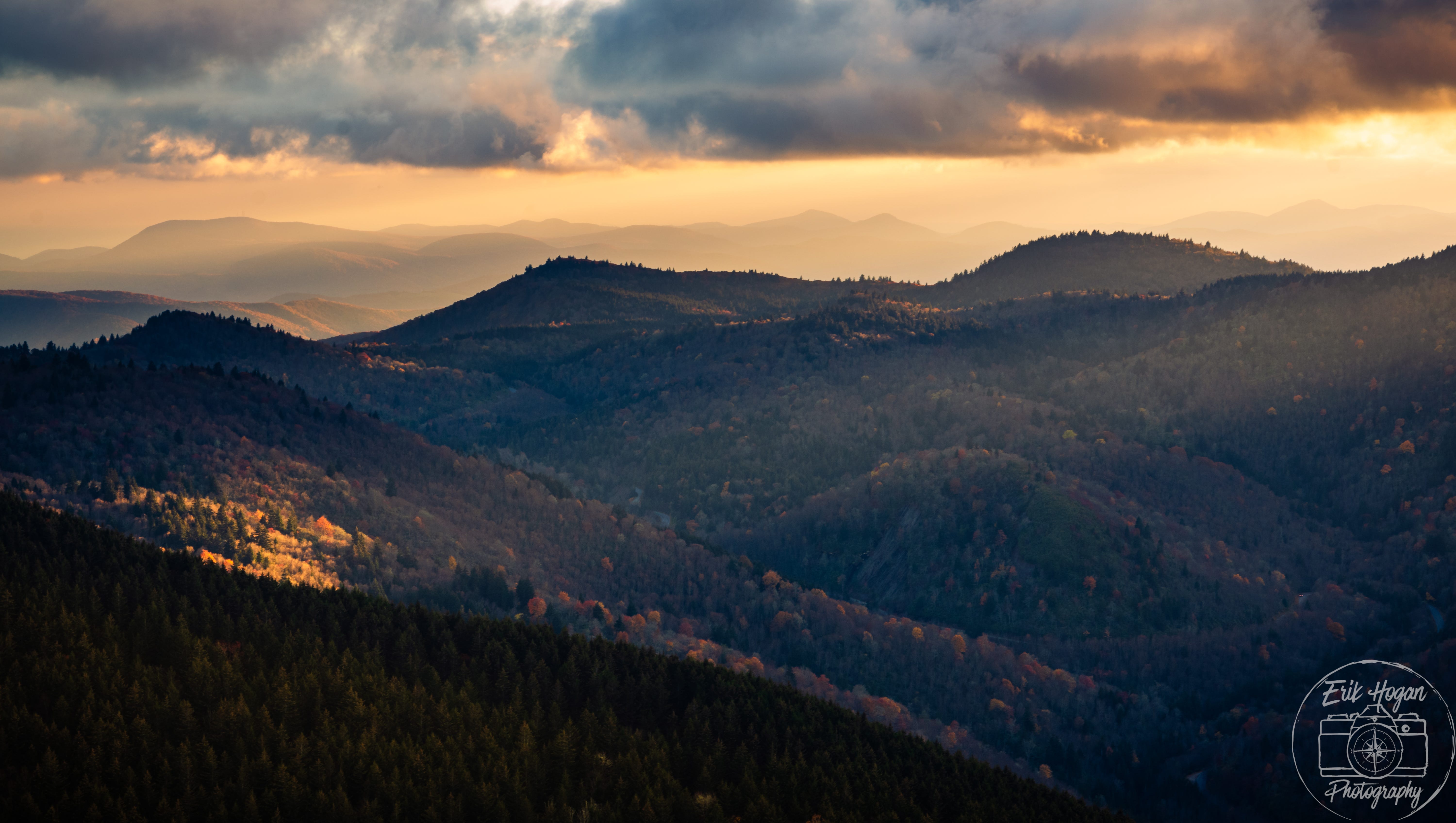
In the past few years I’ve seen an unprecedented level of development where I live. Apartment complexes springing up daily, strip malls and fast food restaurants nobody asked for being built. A never ending construction of storage facilities. All of it necessitates the careless elimination of natural spaces.
Add to this the recent assault on environmental protections and public lands nationwide. The repeal of the roadless rule. The massive reduction of national monuments to clear the way for fossil fuel exploitation. We are rapidly losing the last scraps of the wild that we have left.
So, when I see the rampant proliferation of data centers across the country, I recognize them as abominations. The amount of water and power they use. The noise. The pollution. And also just the amount of acreage of usually rural natural areas that are destroyed for their construction. It is truly alarming.
Consider this. OpenAI announced Project Camellia in my home state of Georgia. It will consist of four buildings that sit on 1,400 acres of land! Now, of course they promise closed loop water cooling to minimize water consumption and no raising of power rates for local customers. But this is still 1,400 acres of land! And it sits right on top of an important source of drinking water for the Southeast US, the Floridian Aquifer.
Without a doubt, these data centers are being built to run AI. I, for one, am NOT willing to trade the real world of nature for the ‘improved,’ ‘efficient,’ or ‘utopic’ digital world that AI promises.
Consider the medical field for a moment. The human body is a complex system, meaning that its inner workings are often opaque. You make a small change in it here with a medicine or surgical procedure, but you cannot always know or predict the downstream consequences. In fact, one of the leading causes of death has been iatrogenics- unintended harm caused by medical intervention. Up until the discovery of penicillin people were more likely to die from visiting a doctor than not.
AI is a similar intervention into complex systems. Both the system of the natural world and the system of human beings and their experience of life. We have no idea what the downstream consequences of this intervention are going to be.
Perhaps we should first apply the Hippocratic Oath? Do no harm.
From that basis, I cannot get to the point of asking what type use of AI is ok because I see ANY use of AI as contributing to the construction of data centers and thus causing irreparable harm to the environment.
Would you debate what you strike with a hammer or how hard you hit with it, if you knew that every swing of that hammer hurt your family to some degree?
But let us return to the original concern- that of Substack adding a function for AI to check the amount of AI within an essay.
I do think that the creators of Substack are truly just looking for a way to keep people honest. As an experiment, I did try this out on an essay from a publication I subscribe to today. It showed me that the essay was likely 100% AI generated. In truth, I was starting to have a suspicion, which is why I chose this publication as a test, but I’m still not sure what to make of that.
To be fair, this publication is informational. It doesn’t suggest that it is relaying the author’s personal experience. Honestly, there’s a good possibility that the information in this publication is top notch. But yes, my relationship to it has changed knowing (or believing now, based on the result of this scan) that it is AI.
So if I continue to subscribe to this publication am I contributing to the use of AI, damage to the environment, and intellectual property theft? Perhaps so. Yet Substack has added a function to my essays (without asking me) that allows the use of AI to analyze if AI contributed to them. It violates my working hypothesis of the use of AI without my ability to say ‘no, thanks.’
To be clear, there is a consideration of degree of use here. While I use no AI whatsoever in my writing, photography is a bit more fuzzy. In my editing program there is a button to use AI to remove the dust spots that show up on an image due to dirt on the sensor or lens. It takes about 15 seconds to run and saves me a lot of tedious work. I’ve been using it. That does violate my hypothesis, but at the same time it SEEMS like such a minor infraction as to be inconsequential. Perhaps I’m a hypocrite.
And also, within that program it is not always clear if a tool I am using is AI or not. Some of the masking or selection tools for parts of the image may utilize AI without my realizing it. Should I stop using these? Do I need to abandon digital photography in favor of film?
I don’t know exactly where I stand. Maybe this AI checker is such a small usage, like the dust spot remover function, that it could be considered insignificant? I would like to know if what I’m reading is AI or not. But I’m not sure I want to contribute to AI to find out.
And I’m sort of heartbroken at authentic human creators showing AI test results proving that their work is their own. And the possibility of false positives is now an additional threat we must consider.
So let’s consider why there is a need for this tool, and what is now being asked of creators specifically in the digital space. Because this is just a problem of the digital world.
The digital world was initially a fantastic playground of both information and for connecting with other people across physical space and time in a way never before possible. While false information has always been a lurking threat, the emergence of AI has populated the digital world with an explosion of doppelgangers. The digital world is forever changed.
In the real world (for now) I have no need to run an analysis tool to determine whether the person I’m speaking with is real. In the digital world I do. So, for as long as I continue to choose to participate in the digital world, I am now asked for proof that I am real. I am asked for proof of life.
And yes, I could choose not to enter the digital world. In fact, I would assert that virtually all of the good stuff of life is to be found outside of it. But the cost of using AI is breaking the veil between the worlds. The environmental cost of the development that drives AI is an active sacrifice of real life for a hollow approximation of it.
Another question we are left with, however, is how much to trust the AI checker itself. There are already concerns of false positives. But how can I be assured that there is no bias in the system? I mean, it seems that flagging something as having AI content is perceived negatively. So, could something be flagged because the system doesn’t like the content? I’m currently writing a largely anti-AI essay here. What if Pangram’s AI doesn’t agree with the content and flags this as AI written just so I lose all credibility? That might be laughable at the moment, but is a real possibility the more AI evolves.
Run the AI checker on my essays, if you like. I don’t care what the results show because I know the work is my own and is real. As I state in my Field Notes introduction post, this is a work of exploration, not answers. Using AI to generate my essays would entirely defeat the point of them. I honestly wouldn’t hold it against anyone who did check my work. Like I stated above, I would like to know as well.
But if you ever had questions or doubts, I think the human thing to do would be to ask me. I respond to everyone’s comments. Perhaps my shameless wilderness selfies suddenly have value?
I can show you where I stood. I can describe the freezing nights. I can show you the worn out gear. I can recount to you how scared I was. I can show you the notepads I scribbled it all on.
I can show you my scars. They are evidence of my experiences, the basis of my understanding, and are my proud proof of the humble human life I’ve lived.
Post script-
After writing this essay Substack published an essay of their own responding to some of the feedback about this.

According to this, “These features do not use publisher content, either through Substack or Pangram, to train generative AI models.” So that’s good news. Also, they have now added a function for authors to disable the AI scan for specific posts.
I think its important for authors to be in control over whether they allow the use of AI to scan their posts for AI, so I’ll also put this down as a win. Still, I’m leaving that option available for now. We’re all trying to fumble our way through these new dilemmas, so I’ll leave it up to everyone to decide on their own.
I know there are issues and solutions beyond what I’ve touched on here. This is probably a ‘too be continued’ topic, but one that I really don’t intend to write about regularly.


My friends, I would really like to hear your thoughts on this one! Where’s the line of acceptable use of AI? Is it rational to avoid it due to environmental concerns or do any benefits outweigh that? Am I mistaken about how much environmental harm is being done? Is it a matter of how much we use it or how? Again, my thoughts are a working hypothesis. Help me dial it in!

Ways to support Field Notes-
Check out the photography PRINT STORE
Consider a printed zine of WOODLANDS & WATER
Thank you for your usual, thoughtful essay Erik. Much as it pains me, I don't think AI "creating" works of art or even content is the biggest risk from AI. Apart from the environmental impacts, the longer term impacts (that is, 2027) of seeking convenience, avoidance of thinking, proliferation of deep fakes, etc will be much more problematic. But perhaps I should just ask Chat GPT.
While I think many of the points surfaced here are valuable, I caution your use of AI-detection tools. The tools are incredibly inaccurate. Some novice writers have been witch-hunted over these things. Please do further research here before coming to conclusions about specific publications. As a side note, 0% or 100% as metrics signal that something is broken in the pipeline. Based on statistical analysis and the fact we live in a closed loop system with LLMs (our culture and manners of speech have changed somewhat dramatically with these new conversational partners), it's dubious whether these tools will ever work with certainty. I for one, have found myself contrasting things more and though I did use the em dash prior—I certainly have changed how I use it... For better/worse. There is something to be said about how one holds the tool affects the outcome... Given your self proclaimed usage, I suspect you have a learning curve ahead of you, should you deem that your best path forward. They do lie. They do take shortcuts. But as sounding boards and as research agents with a lot of tooling built up around them? They can be meaningful interfaces to the world. While I read much, the torrent is larger than I could ever consume purely unaugmented... I'm still figuring out how best to use these tools without sacrificing the accuracy and clarity I care about, and I'm a Software Dev! Anyway, keep the thoughts coming! Thanks for the post <3