

Paradox
Field Notes IV.XIX: Can contradictory ideas and views both be true?

Welcome to Field Notes!

A common understanding of a paradox is simply something that contradicts itself. Readers of Field Notes know that we frequently explore Stoic philosophy through idea and example and therefore Cicero’s work Stoic Paradoxes might come to mind. Cicero uses the word ‘paradox’ meaning unusual ideas that went against the grain of common thought at the time. For now, let us consider paradox as ideas that seemingly stand opposed to one another, yet somehow may both be true.
While ideas, perceptions, and opinions may be paradoxical, we must accept as truth, at least on the experiential level, that nature, concrete existence from its largest to its smallest scale, does not contradict itself. What does this signify for apparent paradoxes?
Nature is a complex system, meaning that causes and effects can never be fully calculated or “figured out” by human minds. Complicated things are intricate, but can be solved with effort. The complex cannot- think of the famous butterfly effect. Complexity gives us opacity, uncertainty, and ambiguity that we exist in the midst of every day.
Life is complex. So, for what we perceive as paradox there may be explanations hidden behind the opacity of nature’s complexity. This is life’s mystery. This is why we must learn to laugh in the whirlwind. And this is the attitude we must maintain as we further explore some apparent paradoxes.
I find myself facing many paradoxes lately. Some invoke a curious smile and shrug while the path continues on. Others rise like some insurmountable cliff. The goal is to probe them and, if the opacity that veils them cannot be pierced, then come to accept the contradiction. If both sides are functionally true, then the explanation is perhaps irrelevant.

Paradox #1. Authentic experience is the essence of a life well lived. It is how we learn who we are, how we forge ourselves into who we want to be, and how we understand our purpose and accept our fates. Theodore Roosevelt explains this brilliantly in a part of his Citizenship in a Republic speech in 1910, the quote now known as the “man in the arena.”
It is not the critic who counts: not the man who points out how the strong man stumbles or where the doer of deeds could have done better. The credit belongs to the man who is actually in the arena, whose face is marred by dust and sweat and blood, who strives valiantly, who errs and comes up short again and again, because there is no effort without error or shortcoming, but who knows the great enthusiasms, the great devotions, who spends himself in a worthy cause; who, at the best, knows, in the end, the triumph of high achievement, and who, at the worst, if he fails, at least he fails while daring greatly, so that his place shall never be with those cold and timid souls who knew neither victory nor defeat.
-Theodore Roosevelt
However, the value placed on authentic experience by the modern world is rapidly diminishing. We now have cheery social media influencers showing sanitized, idealized versions of life. Highlight reels that skip the struggle in order to sell something. Cinema and TV shows presenting caricatures of humans so that we may look at a screen and love, laugh, conquer, or fear all without having to leave our seats. We have chemical, food, or alcohol indulgence, theme parks, doomscrolling- it all amounts to the same escapism and avoidance of confronting ourselves. And for those willing to venture out into the world there are tourist excursions, points of interest and curated experiences guaranteed to offer all the best parts while eliminating uncertainty and effort.
What of the individual who has gone to hell, found their way back without a map, and who has explored every agonizing edge of their being in order to define themselves and their place in the world? The modern world does not scoff. It simply changes the channel to something a little more entertaining.
All of this is an extension of a change in mentality that took place long ago. We are just witness to its rapidly ballooning effects. Maninder Järleberg, PhD explains this pivot point with great erudition in her essay on The Last Heroic World.

The paradox is a personal one. I value authentic, lived experience above almost all else. Solo backpacking in the wild can expose one to extremes of the environment and personal endurance. My career field, while not as extreme as some, at times involves real danger, real consequences, and no easy solutions.
There is great insight to be gleaned from this. I feel strongly that this insight is worth sharing. Yet I do not have the official credentials, degrees, or titles, for whatever they are worth, to lend a recognized authority to anything I say. When I examine my experiences think on how they resonate into the larger context of life, it is not from any basis of higher education in philosophy. When I make a photo of a scene that speaks to my soul, it is without formal instruction in the art.
So, any credibility I can hope to have comes through the demonstrative. I must show myself as an example, if my words are to carry any weight at all. I write of my own real experiences to try to show what I believe, what I value, what I’ve learned. My photos are highlights, for sure, but they come from a place I’ve actually stood and represent a visual and emotional impact that I have felt.
But, in truth, in sharing all of this I have to some degree made my experiences performative, as well. This can’t NOT be the case. A dramatic photo of myself in some remote situation in the wilderness is a true, lived experience. But it is also a posed scene, intended for others to witness.
The authentic and the performative. Can both realities be true?
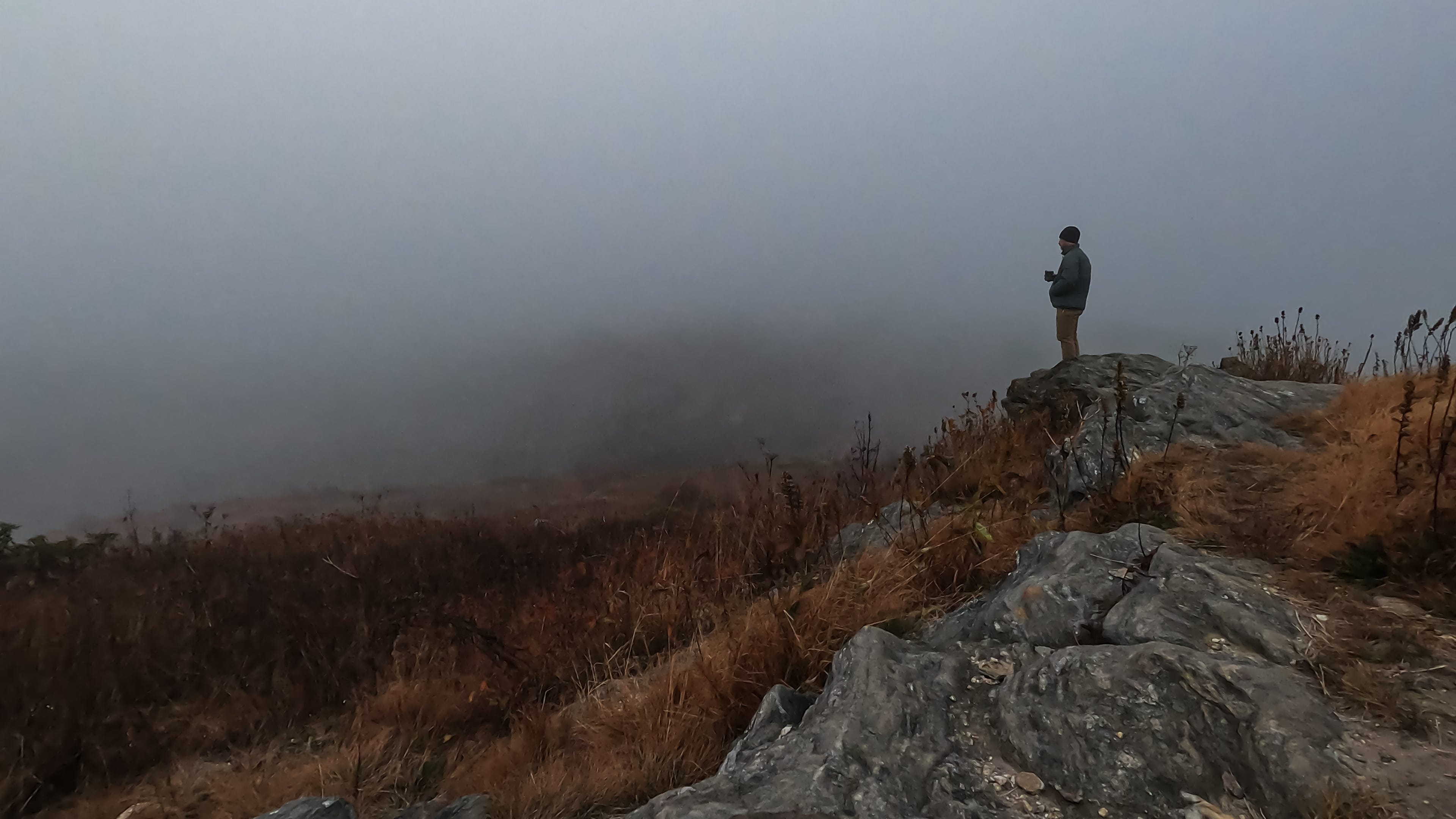
Now for a tangent, and Paradox #2. The experiences I’ve had, whether in the line of duty or pushing my limits in untamed lands lead to a sublime appreciation for life. This is undeniable for anyone who understands lines of limits and what lies beyond.
Once one has experienced the sublime in nature and can see that nature is omnipresent at all times, a profound gratitude emerges in which truth and beauty are everywhere. But. At the same time, great adventure seems to incite a drive for more great adventure. The term ‘adrenaline junky’ captures this trend, though the experience does not have to be one of heart pounding excitement. It is simply the feeling that one must go somewhere else and do something more to find that sublime edge, all while overlooking the present.
Fortunately, there are sensible voices out there. Lou Tamposi writes of a web of awareness in On Cultivation. Ensnare everything in awareness and experience. Miss nothing.

Sam Alaimo tosses questions as sharp as knives in What a Winter’s Training Can Teach Us About Meaning. They are surgical. Instruments of healing, not harm. So, when they cut to the bone this is the best thing that can happen.

To address this, I have also re-focused on being more attentive, observant, and appreciative of the every day. I relieved myself of the pressure to take “good” photos with my DSLR camera for a bit, and the resultant looming burden of processing them later on a computer.
Recent days have been about recognizing the moment. And when that moment comes, I capture it with an iPhone, a camera I almost always have at hand. And then I move on.
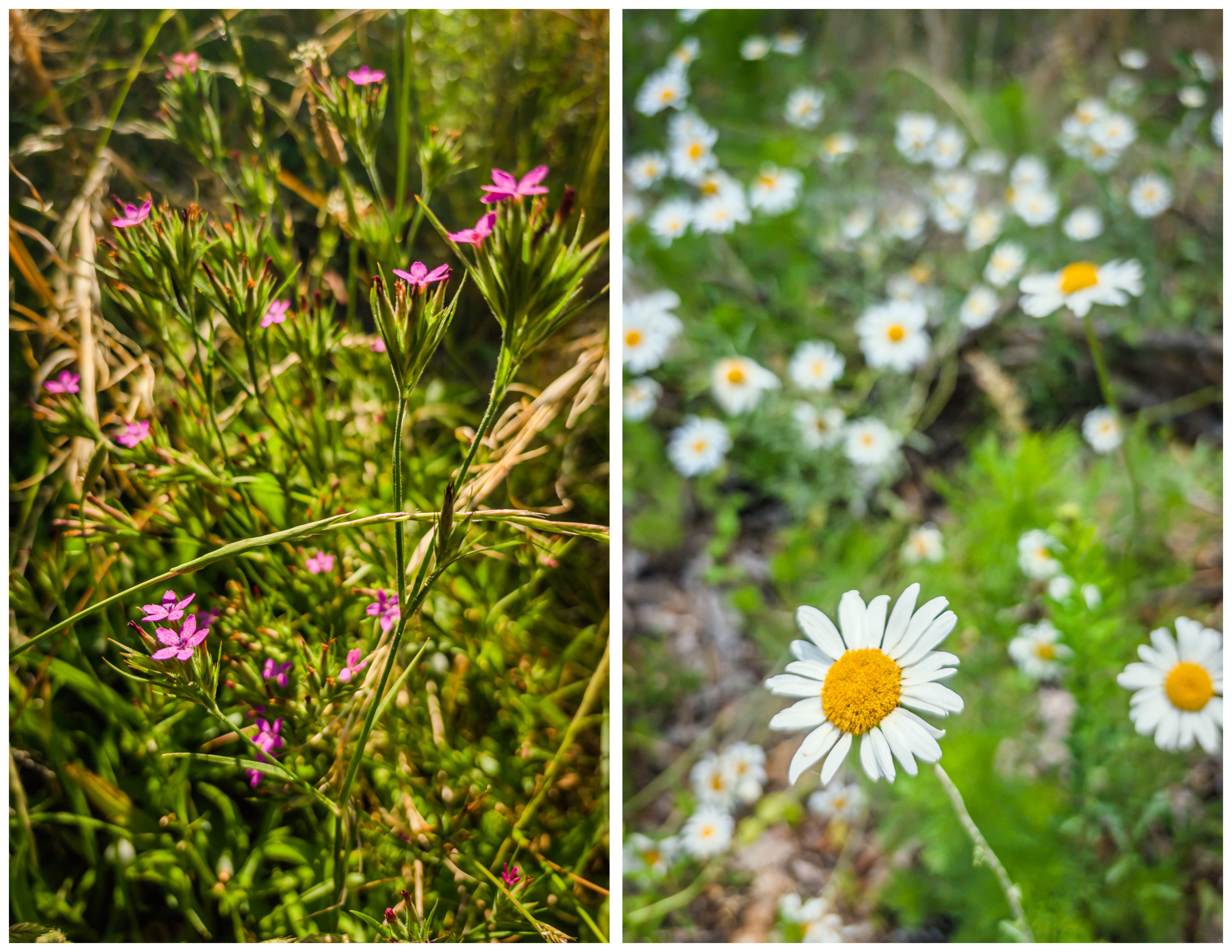


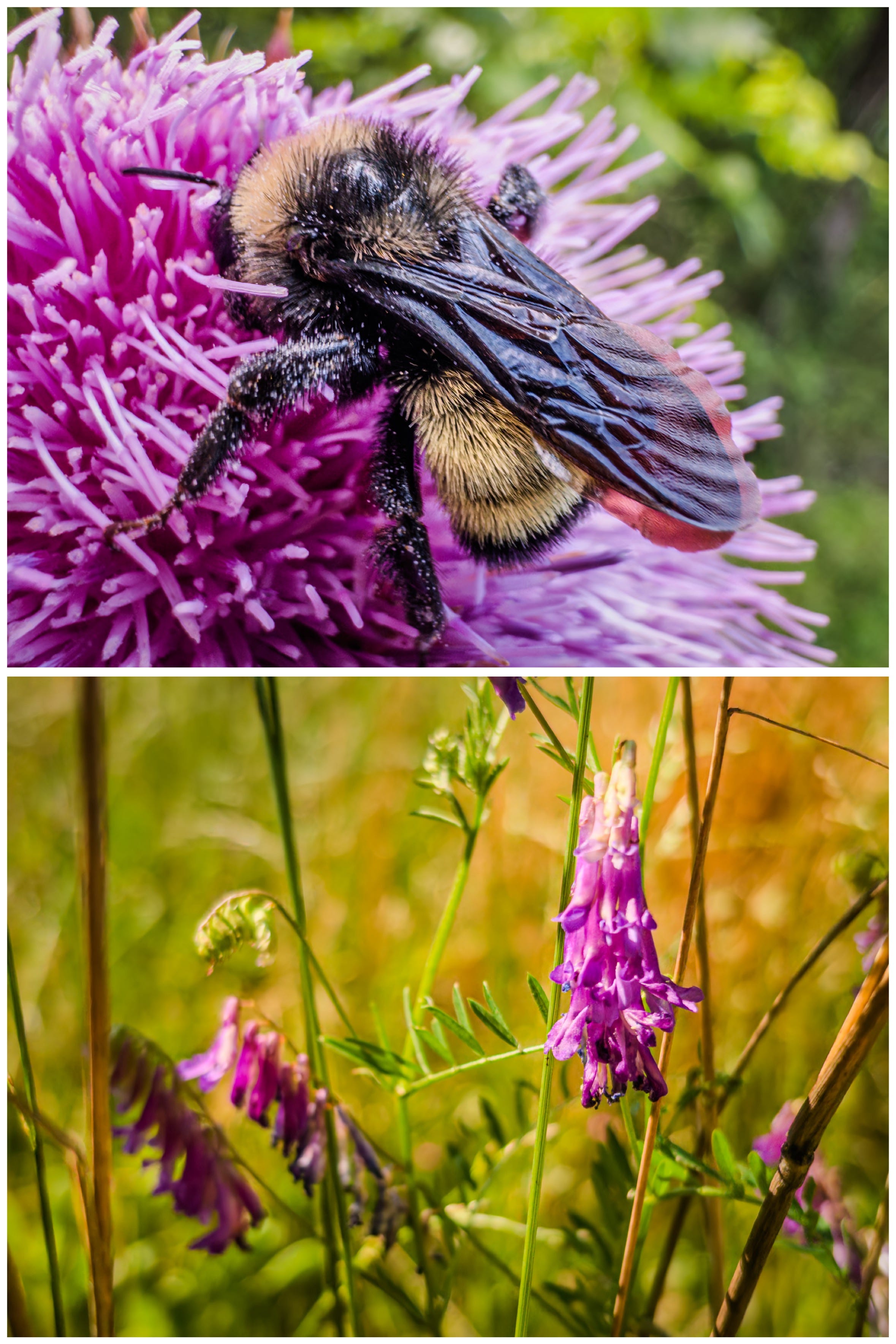

Presence, appreciation, gratitude. They coexist alongside a deep yearning for pursuit, struggle, achievement, intensity. Recognition of the exquisiteness of the here and now can co-inhabit my skull along with an irrepressible quest for grandeur. Both of these are true, as a paradox. Any explanation lies behind opacity.
Our final Paradox #3 for the day is a technical one, so let us take a walk in the weeds for a bit.
Photography is about the vision. It is to understand light, composition within the frame, perspectives, tones, and color. The camera, the tool, has its influence, but it does not determine the vision. I have spent time learning to use the iPhone’s camera, so that when this tool is at hand I can use it to the greatest extent of its capability. And to do this I use specific apps to capture RAW image files with the phone and process them on other specialty apps.
Darkness and light exist within a range in a digital image file. There are points of pure black and of pure white, beyond which any visual detail is lost. Typically this is much more of a concern with the whites in a picture, as they can easily be “blown out.” Too bright, no data, no recoverable detail.
Within the last couple of years technological advancements in certain digital display screens have allowed for a greatly extended upper end range of whites. This is now referred to as high dynamic range, or HDR1 . The results are brilliant; truly stunning displays of light.
Sounds great, right? So where is the paradox? It lies in the fact that only certain screens can display HDR images. iPhones have HDR displays, as do some MacBook computers. Newer Android phones may. Some computer monitors may, but many do not. Older phones likely do not have HDR displays. Without an HDR display you are presented a lower resolution version of the image, sometimes with a greatly altered range of darks and lights. It can appear not at all the way the image was processed and intended to appear.
As I process photos using the apps on my phone, I see it in HDR. If I share that image online, you may see the HDR version or the lower resolution version, depending on what device you view it on. This is truly is the Schrödinger’s Cat of photography. The photograph is simultaneously breathtaking and a hot bag of trash. You manifest which version by looking at it. Is this a paradox?
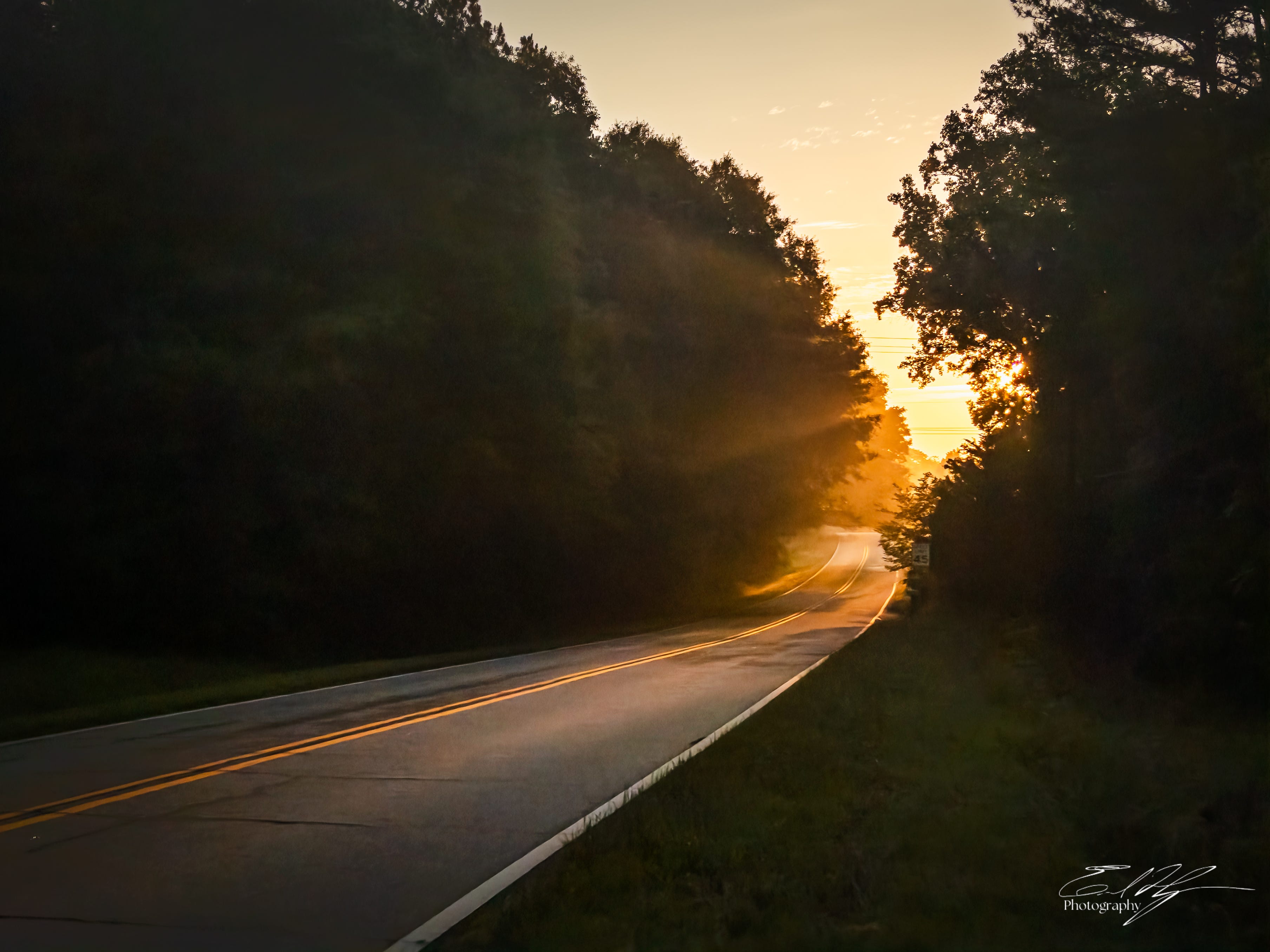
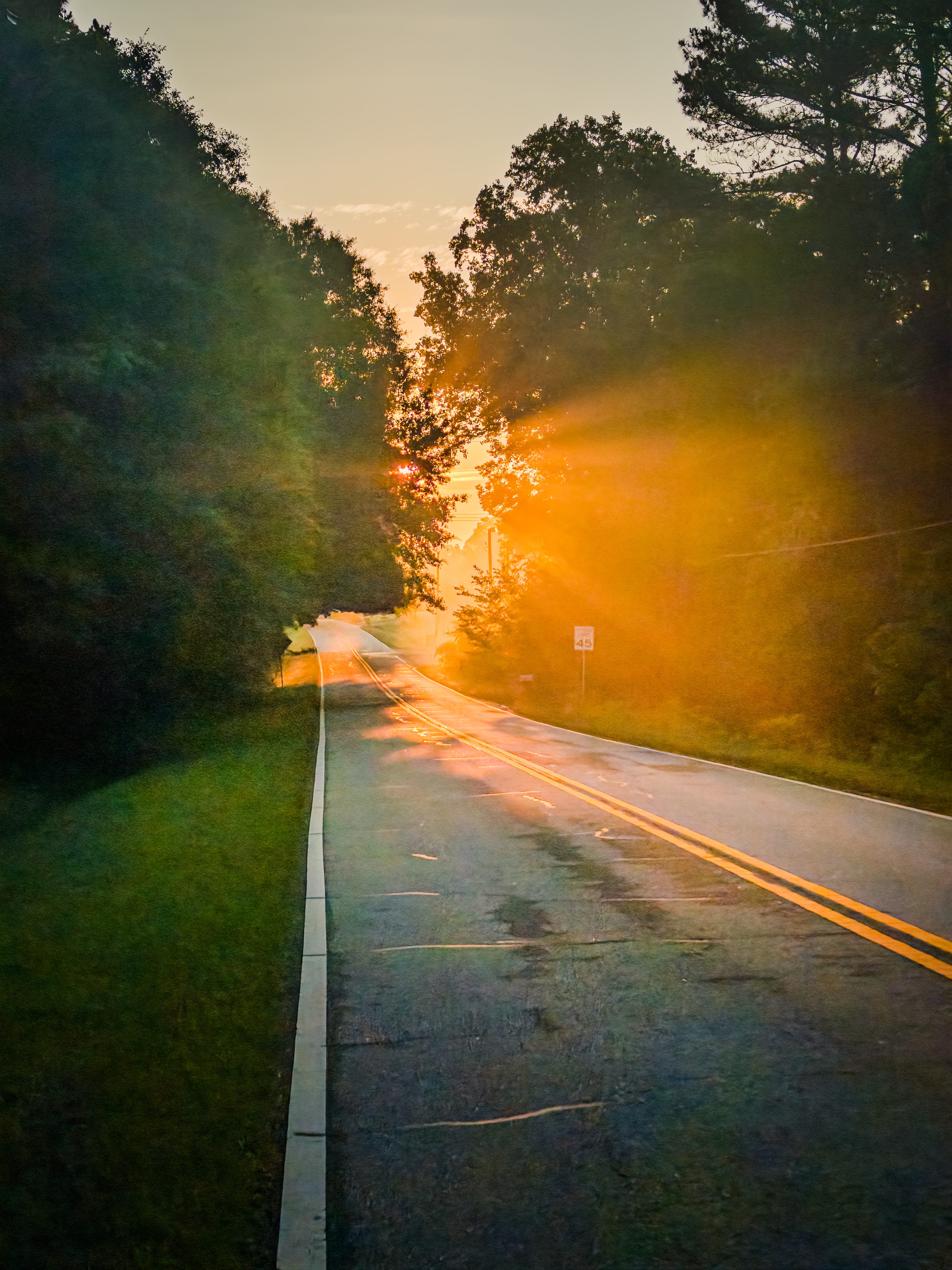
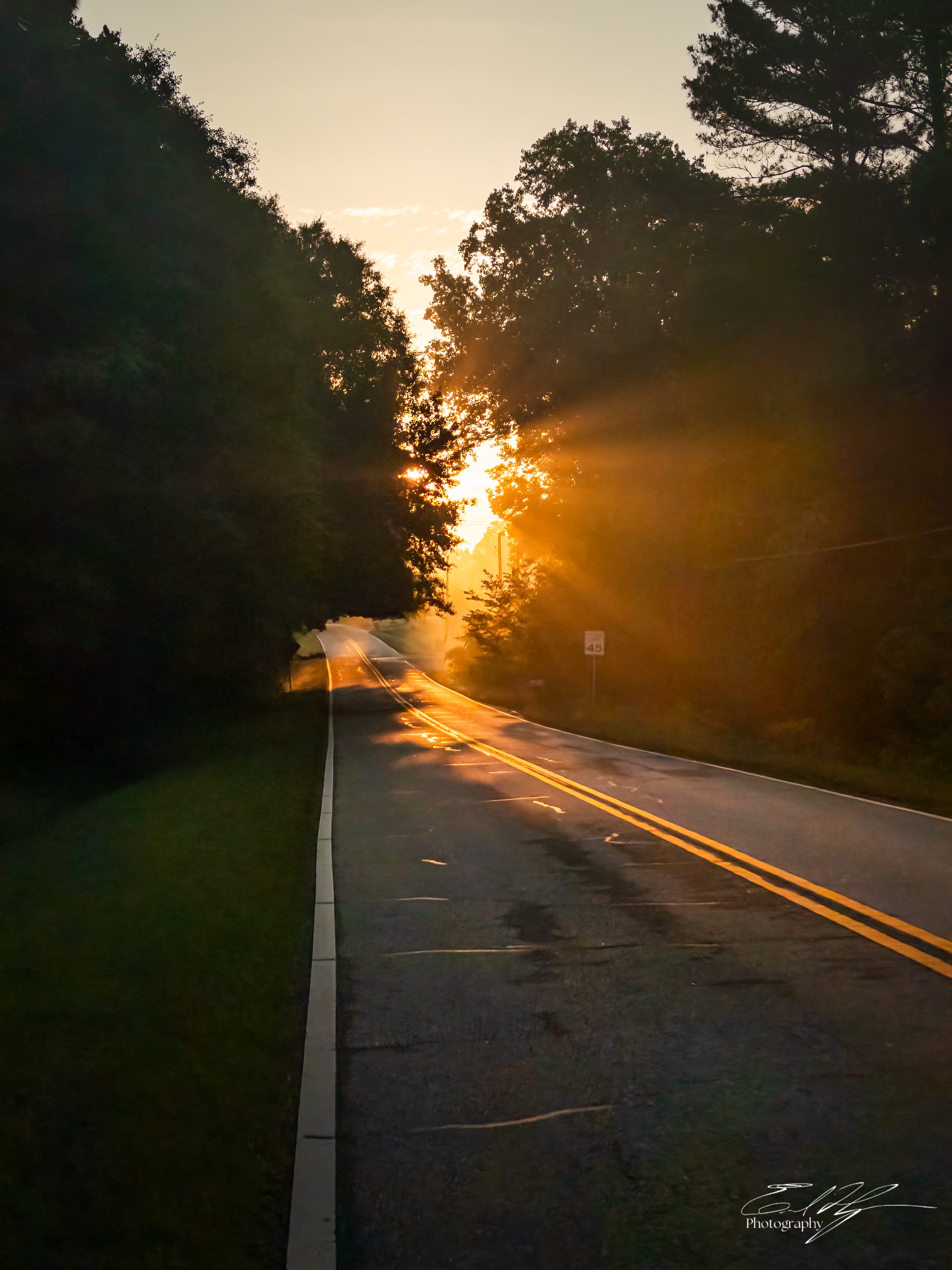
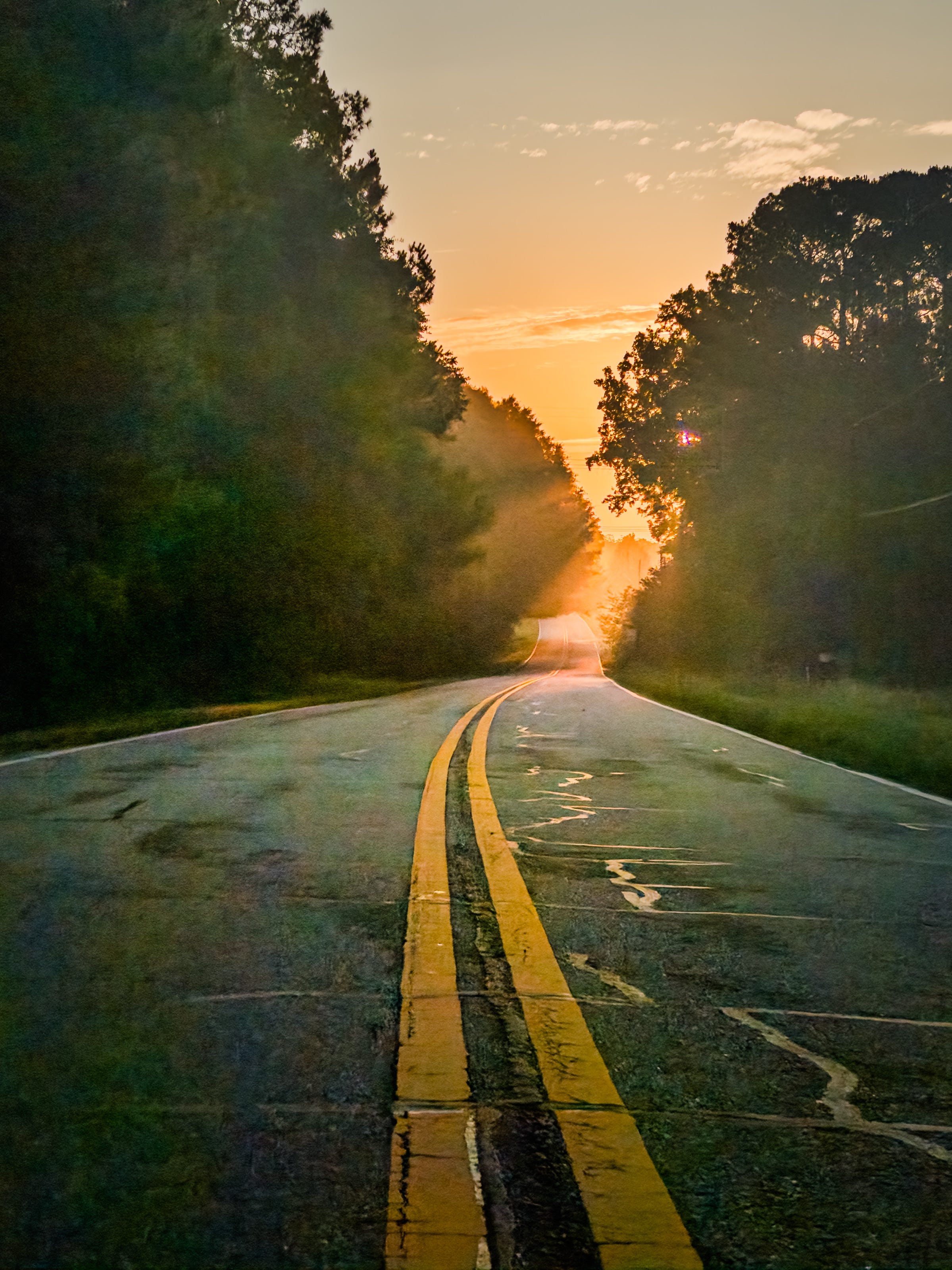
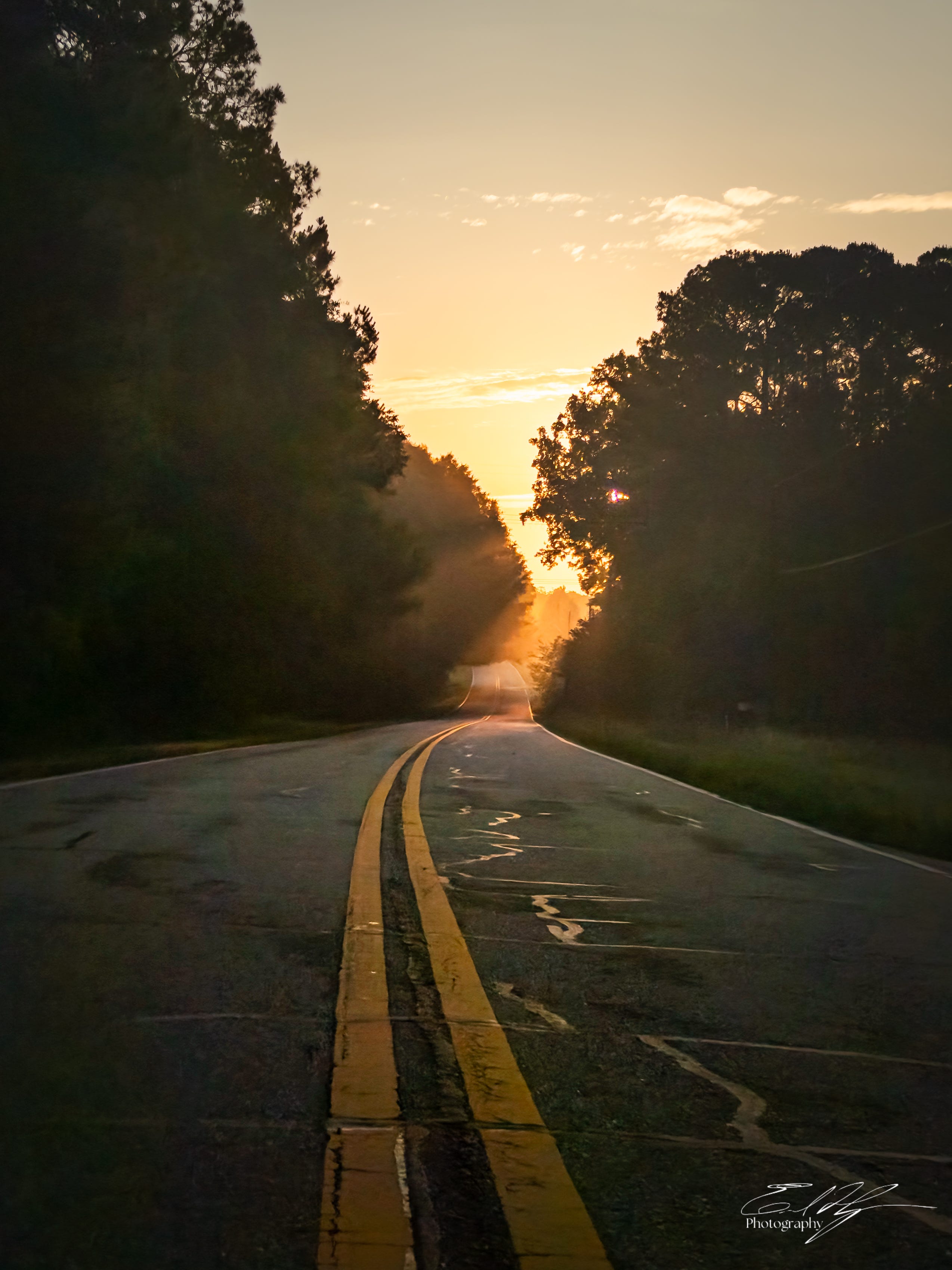
Let us conclude with an experiment. The other day was an ordinary one, but as I turned down an empty road just after sunrise I saw a striking scene of light rays streaming through the humid air. The sublime beauty of an everyday setting, demanding only my full appreciation. I parked and captured three RAW file photos with the iPhone.
The photo at the top of this essay is one of those. I downloaded it and processed it on my computer. Good or not, I’m confident the image is as I intended it.
For the other two, I processed them twice- the same RAW files, once on my computer and once on the app on my phone. Here’s the thing. The images on on my phone look good. Really, really good. I then downloaded those finished files to my computer and and inserted them below. That exact same file that looks so good on the phone appears glaring, egregious even, on my computer screen which is not an HDR display.
What will happen when this essay is published? I truly have no idea. Until I look at the published version on my phone, I won’t know if the HDR image translated to my computer will translate back to HDR or if it will remain the low quality version.
As a control, I’m presenting both versions of these two images. The photo on top is the file processed on the iPhone. The hopefully HDR version. The version below it is the same RAW file, but processed on my non-HDR computer. It comes close to the HDR version I see on the phone. Close.
Perhaps I have gotten us lost in the weeds here a bit. This last paradox, a photo being both terrible and brilliant at the same time, is likely of interest only to a few of you.
In any case, this is all just an attempt at feeling my way along through the opacity and mystery of life. It might just be true that we each find our own clarity amidst the complexity. It’s a paradox.


How do you all see the HDR photos? Is there a huge difference between them? If not, you may be seeing the HDR version. I actually do hope that’s the case, even if it means I lose the illustration of my point.
Anybody else recognizing paradoxes? These aren’t the only ones I’m experiencing. Perhaps I’ll explore more in the future. Till then, let me hear your thoughts!

If you are enjoying Field Notes, you can support my work in several ways. Share, subscribe, upgrade, tip, or check out my store. Your support goes directly towards the food, supplies, or gear necessary for the photography, writing, and adventures that I share-
Not to be confused with the HDR of several years ago, which is the process of merging several photos of different exposure levels together into one image that contains detail in both the shadows and the whites.
Ok, so the HDR version of the last 2 photos did not translate back. I think we are all seeing the low res version. I’ll try posting them in Notes to see if the HDR version comes across.
Man, Erik, I think about these paradoxes all the time. How do hold onto these experiences closely enough to capture them, but loosely enough so as not to miss everything else that happens as a part of them. How do you find novelty in the familiar? How do you let go of control to gain it?